Friday, September 9, 2011

Spot Diagnosis 003

A 73-year-old woman presented with new-onset periorbital purpuric, nonblanching, nonpruritic lesions. The lesions appeared spontaneously and were not associated with any recent trauma. She did not take aspirin, non-steroidal anti inflammatory drugs, or any other anticoagulant agents. On physical examination, no similar skin lesions were found elsewhere. In addition, laboratory studies revealed mild impairment of renal function and nephritic-range proteinuria. The blood count showed mild thrombocytopenia (platelet count, 80,000 per cubic millimeter), whereas the prothrombin time and partial-thromboplastin time were normal.

The patient was diagnosed with multiple myeloma 3 years earlier.

What is the diagnosis of the eye lesions ?

Thursday, September 8, 2011

Spot Diagnosis 002


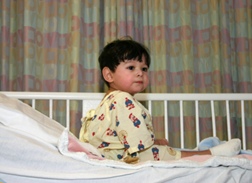
A 3-year-old girl who suffers from congenital deafness and mutism was admitted to our pediatric outpatient clinic.
What is your diagnosis?


Tuesday, September 6, 2011

Treatment And Prognosis for Stevens-Johnson Syndrome

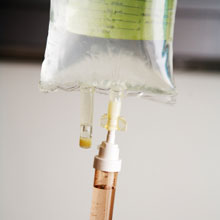
Early diagnosis and recognition with prompt withdrawal of all suspected potential causative drugs are essential for a favorable outcome. Morbidity and mortality decrease if the culprit drug is withdrawn no later than the day when blisters or erosions first occurred. No difference was seen for drugs with long half-lives. The patient must be transferred to an intensive care unit or a burn center. Rapid referral reduces risk of infection, mortality rate and period of hospitalization. Supportive care is the mainstay of treatment. Intervention should include intravenous fluid and electrolyte replacement, environmental temperature control, careful and aseptic handling, early initiation of enteral nutrition by nasogastric tube and pain and anxiety control. Many remedies have been proposed for topical care. Silver-sulfadiazine (silverol) should be avoided because it contains sulfa which is one of the culprit drugs capable of inducing SJS-TEN.

Systemic Corticosteroids. Systemic steroid therapy has been the accepted treatment for SJS-TEN for years. It is believed to suppress the intensity and the extension of the necrolytic process in the skin as well as in internal organs.

Conversely, the use of steroids has also almost become a contraindicated mode of therapy. They were regarded as being hazardous, owing to reports of iatrogenic decrease of host resistance, increase of morbidity and complications, prolonged recovery and reduced survival, following their use.

Parallel to the change in regard to steroid treatment in SJS-TEN, the management of this severe disease was shifted to specialized burn centers and was taken over by nondermatologists, mostly surgeons, who sometimes erroneously regarded SJS-TEN and burns as similar entities. However, in terms of etiology and pathogenesis, a burn is a one-time acute event that affects the skin from the outside, whereas SJS-TEN is a more complex, probably immune (T lymphocyte)-mediated process that reaches the skin from within. The disease process continues to progress over a period of several days after first appearance.

Today, in the absence of clinical control trials, most authors believe that systemic steroids are of unproven benefit in early forms of and are clearly harmful in advanced SJS-TEN.

Intravenous Immunoglobulin. As mentioned previously, the results of IVIg treatment are not uniform in all reports. It should be avoided in patients with renal failure, as increased mortality has been observed. Thus, currently intravenous immune globulin is not considered part of the standard of care for TEN.

In conclusion, optimal treatment for the SJS-TEN spectrum remains to be clarified. To date, no specific treatment has been proven to be beneficial for SJS-TEN. The best management is early recognition, prompt withdrawal of causative drugs and supportive care.

Prognosis
In order to rank severity and predict prognosis in TEN patients, the severity-of-illness score (SCORTEN), was developed. The score is a mathematical tool consisting of the sum of seven clinical variables (age, history of malignancy, heart rate, initial epidermal detachment, admission blood urea nitrogen, glucose levels and serum bicarbonate) as prognostic factors.

The SJS-TEN spectrum is an acute illness with potentially life-threatening complications. Reported mortality rates are 5% with SJS, 10-15% with overlap forms and 30-35% with TEN. Most deaths in patients with TEN are a result of sepsis-induced organ failure.

TEN might also result in late complications, such as transitory hyper- and/or hypopigmentation, scarring primarily due to pressure or secondary infections, alopecia, anonychia and sicca-like syndrome. Phimosis and vaginal synechiae may also be present. Ocular sequelae affecting up to 40% of the survivors may cause corneal lesions, which may result in severe impairment of vision. Therefore, intensive ophthalmologic follow-up and treatment is mandatory in patients with the SJS-TEN spectrum.

                            < Diagnosis

Diagnosis Of Stevens-Johnson Syndrome

Doctors often can identify Stevens-Johnson syndrome based on your medical history, a physical exam and the disorder's distinctive signs and symptoms. To confirm the diagnosis, your doctor may take a tissue sample of your skin (biopsy) for examination under a microscope.
No specific laboratory studies (other than biopsy) exist that can definitively establish the diagnosis of Stevens-Johnson syndrome.
  • A complete blood count (CBC) may reveal a normal white blood cell (WBC) count or a nonspecific leukocytosis. A severely elevated WBC count indicates the possibility of a superimposed bacterial infection.
  • Skin and blood cultures have been advocated because the incidence of serious bacterial bloodstream infections and sepsis contribute to morbidity and mortality.
  • Determine renal function and evaluate urine for blood.
  • Electrolytes and other chemistries may be needed to help manage related problems.
  • Cultures of blood, urine, and wounds are indicated when an infection is clinically suspected.
  • Bronchoscopy, esophagogastroduodenoscopy (EGD), and colonoscopy may be indicated.
Chest radiography may indicate the existence of a pneumonitis when clinically suspected. Otherwise, routine plain films are not indicated.

Skin biopsy is the definitive diagnostic study but is not an emergency department (ED) procedure.
  • Skin biopsy specimens demonstrate that the bullae are subepidermal.
  • Epidermal cell necrosis may be noted.
  • Perivascular areas are infiltrated with lymphocytes.
Although the clinical presentation and patient history usually make the diagnosis of TEN evident, other conditions should be considered in the differential diagnosis - mainly in the early stages of disease when the complete picture may not be obvious. The differential diagnoses for TEN include SSSS, acute graft-versus-host disease, linear IgA dermatosis, paraneoplastic pemphigus, pemphigoid and pemphigus, and AGEP.

                  < Causes                      Treatment >

Causes Of Stevens-Johnson Syndrome

Stevens-Johnson Syndrome (SJS) is usually caused by a response to a medicine that has been taken. The response may happen within one week to two months of taking the medicine. SJS may also be caused by infection, vaccinations, or diseases involving your organs or whole body. The cause of SJS may be unknown, and SJS risk may be genetic.

The most common medicines that may cause SJS are:

  • Antibiotics (used to treat infection)
  • Anti-seizure medicines (used to treat convulsions).
  • Non-steroidal anti-inflammatory medicine (used to treat swelling or fever)
  • Penicillins, which are used to treat infections
SJS causes are broken into four different categories:

  • Infections 
  • Drug Reactions   
  • Malignancies 
  • Unknown Causes.
Underlying viral infections that have been associated with Stevens Johnson Syndrome include herpes simplex, AIDS, coxackie viral infections, influenza, hepatitis, mumps, mycoplasmal infections and others.
Bacterial infections include diphtheria, Brucellosis, mycobacteriae, mycoplasma pneumonia and typhoid. Fungal infections previously associated with SJS include coccidioidomycosis, dermatophytosis and histoplasmosis. Certain types of protozoal infections, including malaria and trichomoniasis, have also been reported. Although Stevens Johnson Syndrome is relatively rare in children, it has been associated with Epstein-Barr virus.

                  < Symptoms                          Diagnosis >


Symptoms of Stevens-Johnson Syndrome


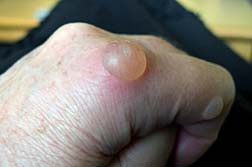
Typically, Stevens-Johnson syndrome affects the mucous membranes of the oral cavity, nostril, eyes, and both the anal and genital regions. It may or may not be associated with skin lesions elsewhere on the body. Oropharyngeal (mouth) lesions may be so intolerable as to prevent eating, and there may be recurring oral ulcers. Often, the skin lesions may look like a target-lesion (3 concentric zones of color change) or as bullae (bubble-like).
A painful conjunctivitis may occur in the eye, frequently with a pus discharge, and can lead to corneal scarring and loss of vision. In addition to the mucous membrane lesions, fever and exhaustion are usual.
Approximately one-third of patients have pulmonary involvement with cough and patchy infiltrates (material that has permeated into the tissues) on chest x-ray. In fatal cases, renal failure and pneumonia may occur.
Signs and symptoms of Stevens-Johnson syndrome include:
  • Facial swelling 
  • Tongue swelling 
  •  Hives 
  • Skin pain
  • A red or purple skin rash that spreads within hours to days 
  • Blisters on your skin and mucous membranes, especially in your mouth, nose and eyes
  • Shedding (sloughing) of your skin

Up to two weeks before SJS sores appear on your mouth and skin,
you may have the following symptoms:
  • Cough
  •  Fatigue (sleepiness) 
  •  Fever and chills
  •  Headache.    
  •  Muscle and joint pain
  •  Sore throat
  •  Nausea, vomiting, constipation, or diarrhea
  •  Mild dizziness or drowsiness
  •  Tender or swollen glands
  •  Swollen or painful gums
  •  Headache
  •  Muscle twitches
  •  Increased facial hair
  •  Swelling of breasts
  •  Insomnia

When to see a doctor
Stevens-Johnson syndrome requires immediate medical attention. Seek emergency medical care if you experience any of the following signs or symptoms:
  •   Unexplained widespread skin pain
  •   Facial swelling
  •   Blisters on your skin and mucous membranes
  •   Hives
  •   Tongue swelling
  •   A red or purple skin rash that spreads
  •   Shedding of your skin 
             < Definition                                 Causes >

Stevens-Johnson syndrome

Stevens-Johnson syndrome is a rare, serious disorder in which your skin and mucous membranes react severely to a medication or infection. Often, Stevens-Johnson syndrome begins with flu-like symptoms, followed by a painful red or purplish rash that spreads and blisters, eventually causing the top layer of your skin to die and shed.

Stevens-Johnson syndrome presents a medical emergency that usually requires hospitalization. Treatment focuses on eliminating the underlying cause, controlling symptoms and minimizing complications.

Recovery after Stevens-Johnson syndrome can take weeks to months, depending on the severity of your condition. If your doctor determines that your case of Stevens-Johnson syndrome was caused by medication, you'll need to permanently avoid the medication and all others related to it.

                                            Symptoms >

Related Posts Plugin for WordPress, Blogger...

 
Design by Free WordPress Themes | Bloggerized by Lasantha - Premium Blogger Themes | cheap international calls